The Dialectics of the Relationship Between the Political System and Artificial Intelligence
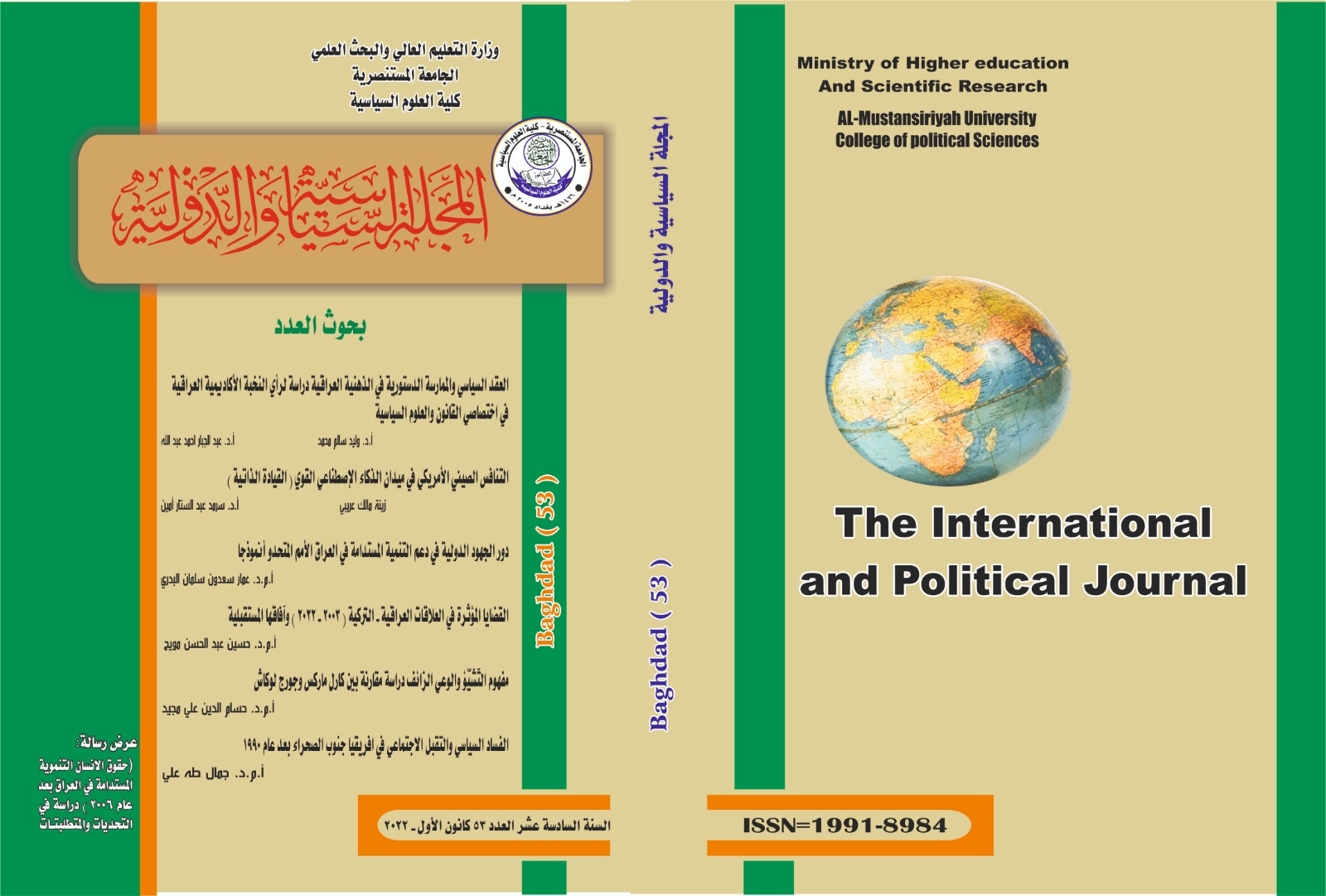
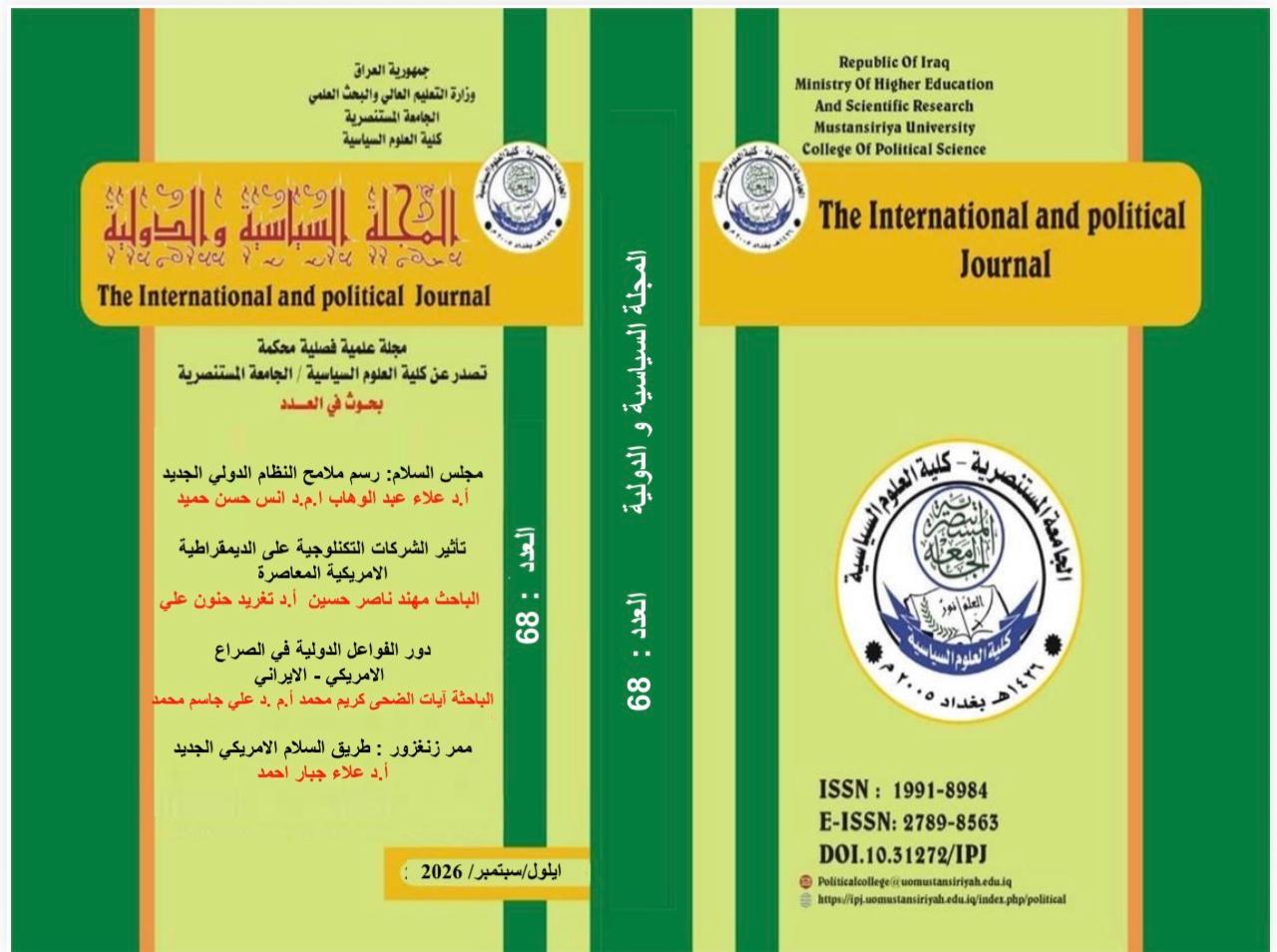
the international and political journal
Abstract
Artificial intelligence (AI) and its potential applications in political life and the democratic process, perhaps even extending to decision-making, have garnered the attention of researchers, specialists, and policymakers. However, the application of AI and its integration into the political system and state institutions necessitates careful consideration due to the presence of both positive and negative impacts. This debate leads to two conclusions: first, AI provides effective tools for improving governance and enhancing the capabilities of the political system both domestically and internationally; second, AI's capabilities pose a threat through the manipulation of facts, influencing public opinion, violating privacy, and destabilizing the political system and democracy. This compels governments to consider establishing legal frameworks and regulatory mechanisms while ensuring the flexibility of the political system and democratic governance, and to work on enhancing governmental capabilities to adapt to challenges. The research revolves around questions about the dialectic of the relationship between the political system and artificial intelligence, and whether the latter represents a source of development or a contemporary challenge to democracy. This is based on a scientific methodology combined with the systematic and analytical approach to interpret the ability of the political system to contain the impact of artificial intelligence, to reach a conclusion that the relationship between the two parties is still developing and escalating, and the impact of each party on the other lies in the nature of the political system and what it has in terms of capabilities and flexibility to deal with artificial intelligence.
References
Abdul-Hamid, Hassan Saad, 2025, The Use of Artificial Intelligence in Deceiving Public Opinion, Al-Arkan Journal, Institute for Research and Strategic Studies, Popular Mobilization Forces, Issue 3: 182-214. (in Arabic)
Abdul-Jabbar, Fatima, 2024, Transformations You Can't See: How Artificial Intelligence Is Reshaping Our Minds and Societies, Iraq: Institute for Research and Strategic Studies, Popular Mobilization Forces. (in Arabic)
Accessed 27/6/2026.
Al-Azab, Heba Gamal El-Din Mohamed, Political Science Between the Impact of Artificial Intelligence Technologies and a Review of the Pillars and Functions of the Concept of the State and the Structure of the Political System, Journal of the College of Administration, Economics and Political Science, Volume 23, Issue 1: 103-150. (in Arabic)
https://jpsa.journals.ekb.eg/article_211370_889b57298b0b1619de7ed84100114556.pdf
Al-Faisal, Turki, 2011, The Gulf Region and Global Strategic Developments: Internal Challenges, in: Global Strategic Developments: A Foresight Perspective, pp. 21-27, Abu Dhabi: Emirates Center for Strategic Studies and Research. (in Arabic).
Allen, Greg, and Taniel Chan, 2017, Artificial Intelligence and National Security, BELFER CENTER for Science and International Affairs
Al-Obaidi, Laith Essam Majeed, 2025, Artificial Intelligence and Political Science, Baghdad: Al-Rafidain. (in Arabic)
---,2024, Artificial Intelligence and Human Existence: An Intellectual Reading in the Political Dimensions, Journal of Political Science, Issue 67: 291-320. (in Arabic)https://jcopolicy.uobaghdad.edu.iq/index.php/jcopolicy/article/view/684/544
Al-Saidi, Saad Obeid, Ali Tariq Al-Zubaidi, and Saad Ali Al-Tamimi, 2024, Artificial Intelligence: A Study of Concepts, Basic Applications, Risks, and Employment in Foreign Relations, Baghdad, Hammurabi Center for Research and Strategic Studies. (in Arabic)
Al-Sheikh, Mamdouh, 2007, Technological Espionage: Stealing Economic and Technical Secrets, Amman: Beirut Library. (in Arabic)
Alwan, Nour Issa, 2026, Artificial Intelligence and its Impact on Building Cultural Identity: An Analytical Study in Digital Sociology, Larak Journal, Vol. 18, No. 3: 439-451(in Arabic)
.https://lark.uowasit.edu.iq/index.php/lark/ar/article/view/5576
Azzouzi, Abdul Khaliq, 2013, The Security Environment and How to Formulate Strategy, Emirates Lecture Series 160, Abu Dhabi: Emirates Center for Strategic Studies and Research. (in Arabic)
Bouadili, Oumaima, 2025, The Impact of Artificial Intelligence on Administrative Decision-Making, International Articles Journal, Issue 5: 44-60(in Arabic).https://iaj.ma/wp-content/uploads/2025/08/3-
Bourguignon, François, and Jean-Philippe Platteau, 2022, Appraising institutional challenges in the early stages of development, UK government, Economic Development & Institutions, Oxford Policy Management
Bova, Russell, 2016, Democracy and Freedom: The Cultural Relationship, in: Democracy: Selected Studies, ed. Larry Diamond and Mark F. Plattner, 499-520, Beirut: Publications Distribution and Publishing Company. (in Arabic)
Delo, Stephen, and Timothy Dell, translator, 2010, Political Thought, Political Theory, and Civil Society, Cairo: National Center for Translation. (in Arabic)
George, Rachel, and lan Klaus, 2026, Al and Democracy: Mapping the Intersections, CARNEGIE, ENDOWMENT FOR INTERNATIONAL PEACE,https://carnegieendowment.org/research/2026/01/ai-and-democracy-mapping-the-intersections. Accessed 28/6/2026. (in Arabic)
Hassan, Shaimaa Muhammad Mahmoud, 2026, BRICS and Digital Power: A Conflict of Standards and the Reshaping of the International Order, Journal of Political Science, Issue 71: 65-98
.https://jcopolicy.uobaghdad.edu.iq/index.php/jcopolicy/article/view/941/594
https://fja.tu.edu.iq/index.php/fja/article/view/339/308. Accessed 3/7/2026.
Hurd, Will, and Robin Kelly, 2020, Artificial Intelligence and National Security, The Bipartisan Policy Center
.https://cset.georgetown.edu/publication/artificial-intelligence-and-national-security/. Accessed .24/6/2026
Innerarity, Daniel, 2024, Artifical Intellgence And Democracy, United Nations Educational, unesco: 4-25
.https://unesdoc.unesco.org/ark:/48223/pf0000389736
Jungherr, Andreas, 2025, Artificial Intelligence and Democracy: A Conceptual Framework, Arab Policies Journal, Vol. 13, No. 74: 119-135. (in Arabic)
https://siyasatarabiya.dohainstitute.org/ar/issue74/Documents/Siyassat74-2025-Jungherr-Amengay.pdf
Khalifa, Ihab, 2019, Postmodern Society: The Impact of the Fourth Industrial Revolution on National Security, Cairo: Arab Publishing and Distribution. (in Arabic) https://www.scribd.com/document/768233710/%D9%83%D8%A
Landemore, Helen, 2023, "Promoting More Inclusive Democracy with Artificial Intelligence," Finance & Development, International Monetary Fund: 1-4. (in Arabic) https://www.imf.org/ar/publications/fandd/issues/2023/12/pov-fostering-more-inclusive-democracy-with-ai-landemore.
Marsh, James J., and Johan B. Olsen, translator, 2022, New Institutionalism, in The Oxford Handbook of Political Institutions, ed. R.A.W. Rhodes, Sarah A. Binder, and Burt A. Rockman, pp. 27-60, Beirut: Arab Center for Research and Policy Studies. (in Arabic)
Massachusetts Institute of Technology, 2025, Understanding the Impact of AI on National Security.https://executive.mit.edu/Understanding-the-impact-of-AI-on-national-security.html. Accessed .29/6/2026
Murad, Ali Abbas, 2026, National Security: Theoretical Approaches, 2nd ed., Baghdad, Dar Adnan.
Novelli, Claudio, and Giulia Sandri, 2025, Digital Democracy in the Age of Artificial Intelligence.https://arxiv.org/pdf/2412.07791. Accessed 30/6/2025
Núñez, Sascha Hannig, 2025, New Debates on the Future of Democracy: from the impact of Artificial Intelligence to the Urgent Need for Culture-Comprehensive Institutionalization, EUVALUES
.https://www.eu-values.eu/blog/ai-democracy-global-perspectives
OECD, (2025), Governing with Artificial Intelligence: The State of Play and Way Forward in Core Government Functions, OECD Publishing, Paris.https://www.oecd.org/content/dam/oecd/en/publications/reports/2025/06/governing-with-artificial-intelligence_398fa287/795de142-en.pdf
Peixoto, C, and Otaviano Canuto, and Luke Jordan, 2024, AI and the Future of Government: Unexpected Effects and Critical Challenges, New South Center for Policy in the.https://www.policycenter.ma/sites/default/files/2024-03/PP_02-24_C.%20Peixoto%2C%20Otaviano%20Canuto%2CLuke%20Jordan.pd
Pember, Bruce, translator, 2006, American Democracy and the Information Revolution: Technology at the Roots of Political Power, Lebanon: Cultural Dialogue. (in Arabic)
Saleh, Sumer Munir, and Ali Ahmed Abbas, 2021, Multipolarity from the Perspective of Major Powers in the Age of Artificial Intelligence, Damascus: Publications of the Syrian General Authority for Books. (in Arabic)
Saleh, Talib Naji Alwan, 2025, Artificial Intelligence and Political Decision-Making: From Technological Tool to Actor in International Relations, Al-Farahidi Journal of Arts, Tikrit University, Proceedings of the Tenth International Conference: 53-69. (in Arabic)
Suleiman, Anar Saleh Al-Aqel, 2026, "The Impact of Artificial Intelligence on National Security Policies, Comprehensive Science Journal, Volume 10, Issue 39, University of Zawiya, Faculty of Economics, Al-Ajlat: 3318-3337. (in Arabic)https://cjos.histr.edu.ly/index.php/journal/ar/article/view/1756
Usoba, Usunde, and William Whistler IV, 2017, The Risks of Artificial Intelligence to Security and the Future of Work, RAND Corporation(in Arabic).https://www.rand.org/content/dam/rand/pubs/perspectives/PE200/PE237/RAND_PE237z1.arabic.pdf.Accessed 29/6/2026.
Wahid, Maryam, 2025, Politics in the Age of Artificial Intelligence, Al-Ahram Center for Strategic Studies and Policies, 2-6. (in Arabic) https://www.scribd.com/document/914444380/2025-638921092811629179-162. Accessed 25/6/2025.
Ziv, Ben,2025, AI and National Security: Promise and Peril, Cognyte: 1-5.
https://www.cognyte.com/blog/ai-national-security/(in Arabic) (in Arabic)
Additional Files
Published
How to Cite
Issue
Section
License

This work is licensed under a Creative Commons Attribution 4.0 International License.
Journal Policies
All articles published in the International and Political Journal are licensed under a Creative Commons Attribution 4.0 International License. This means that the Authors can:
The journal allows reuse and remixing of content in accordance with a Creative Commons license.
Copy and redistribute the material in any medium or format.
Policy of publishing in The International and Political Journal
The journal is committed to the ethics of scientific publishing, and according to the publication ethics report of the journal.
The decision to publish is based on the value of the scientific research, to what extent it meets the conditions of publication approved, the declared policy of the journal, and its specialty.
It is based on the principles of the scientific honesty, and originality of research submitted for publication. It deals with the names of reviewers and their reports with great confidentiality.
The opinions published in the journal reflect the views of the authors, and not necessarily reflect the opinion of the editorial board.
The journal does not adhere to the publication of whatever comes to it. The time and place of publication are subject to technical considerations adopted in the editorial plan of the journal.
The journal does not abide to return the research papers to their owners whether accepted for publication or not.
The researcher is to be provided with the acceptance of publication within about 24 WEEKS. As for publication, the editorial board reserves its right in priority of publishing. The arrangement of the research papers in the same issue is subject to technical standards.
Diversify of publishing papers from solid universities and scientific centers from inside and outside Iraq is preferable.
The journal maintains hard copies and electronic archive of the published issues in addition to the publication of the research papers.
The journal also publishes the issues electronically through the website of the journal, and the official website of the Iraqi academic journals, and makes it possible to download. Thus, documenting the intellectual property of the research papers and publishing them internationally is achieved.
Terms of publication may be modified when necessary with no previous notice.
The researcher obtains a copy of his research paper. If he wishes to buy acopy of the journal, the volume costs ID 10000 from inside Iraq and $8from the outside.
The Editorial Board considers that the researcher who submits his research paper for publication in the journal has already read the terms and conditions of publication and agreed on them.
The journal publishes the research papers of the postgraduate students in special issues for this purpose.
Stages of editing and publishing:
The researcher undertakes that his research has never been published before, and has not been submitted for publication to other sides until the end of the evaluation procedures and the acceptance of publication in the journal.
The research papers submitted for publication are to subjected for preliminary examination by the editorial board to determine their suitability for the journal specialization, its policy and the safety of scientific research procedures, and then to indicate its eligibility for scientific evaluation. The editorial board may apologize for accepting the research all together or require the researcher to amend it in accordance with the journal policy before sending it to editors.
After conducting the scientific evaluation, the research paper returns back to the researcher to make the required amendments within a maximum of two weeks.
A copy of the final research paper is to be submitted to the secretariat of the journal a hard copy and a soft copy on a CD, in both Word and PDF format. The researcher is fully responsible for the typing and linguistic mistakes after submitting the full research paper on a CD.
Plagiarism checker
All research papers are subjected to Turnitin program to uncover plagiarism before being sent to scientific evaluation. The researcher undertakes a written pledge to take the legal and moral responsibility, in the event of the emergence of plagiarism or taking from the efforts of other researchers, without a reference to them. The journal uses appropriate anti-plagiarism software, such as Turnitin to check for plagiarism.
Dealing with Allegations of Research Misconduct
The Journal shall take reasonable and serious steps to identify and prevent the publication of papers where research misconduct has occurred, including plagiarism, citation manipulation, and data falsification/fabrication.
Scientific Evaluation:
Scientific evaluation strengthens the research paper submitted to the journal and helps to take the appropriate decision by the editorial board to publish it. It also benefits the researchers to improve and correct their research papers.
The research paper is sent to three evaluators in the same specialty to evaluate