Political developments in Sudan and their impact on political instability after 2011
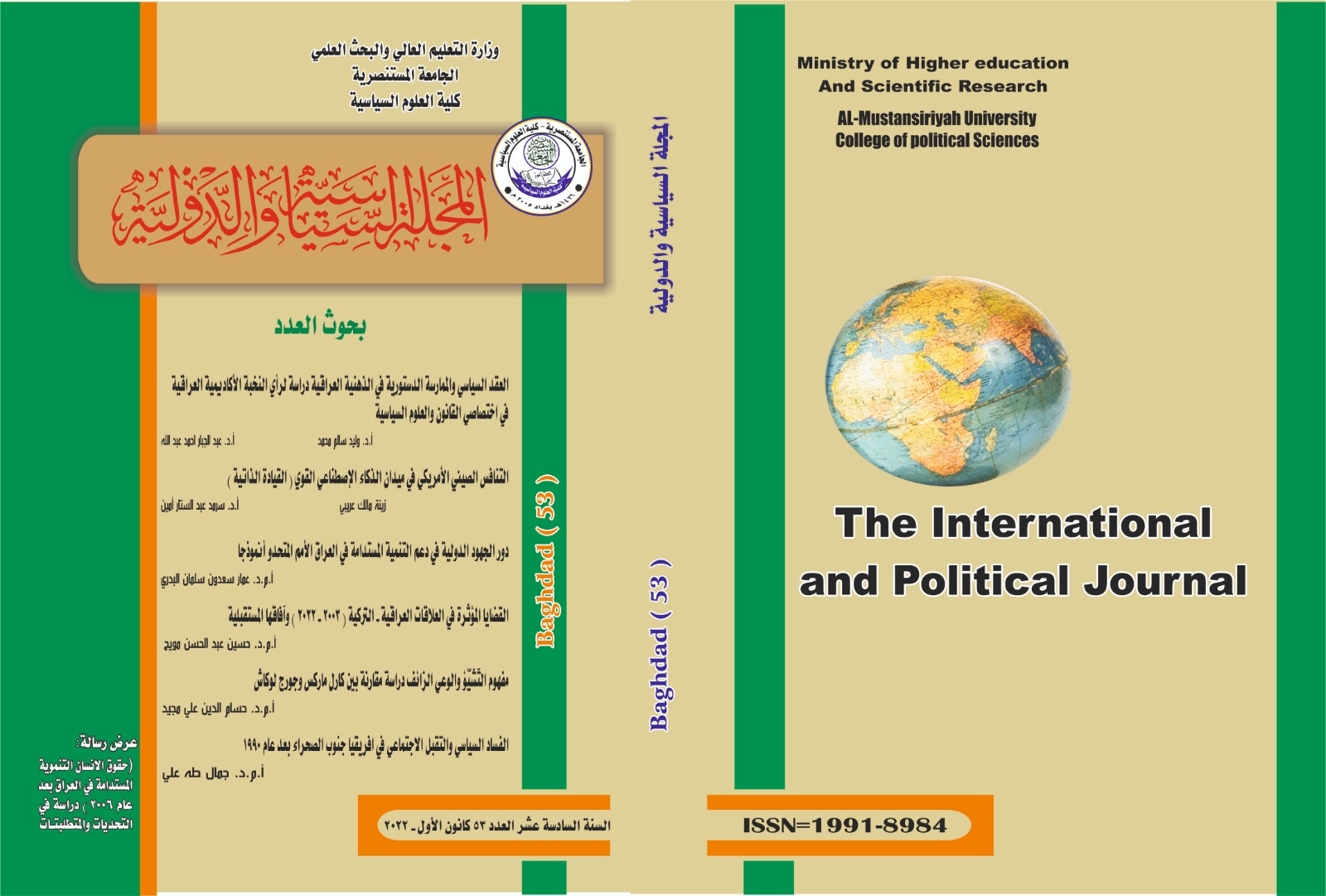
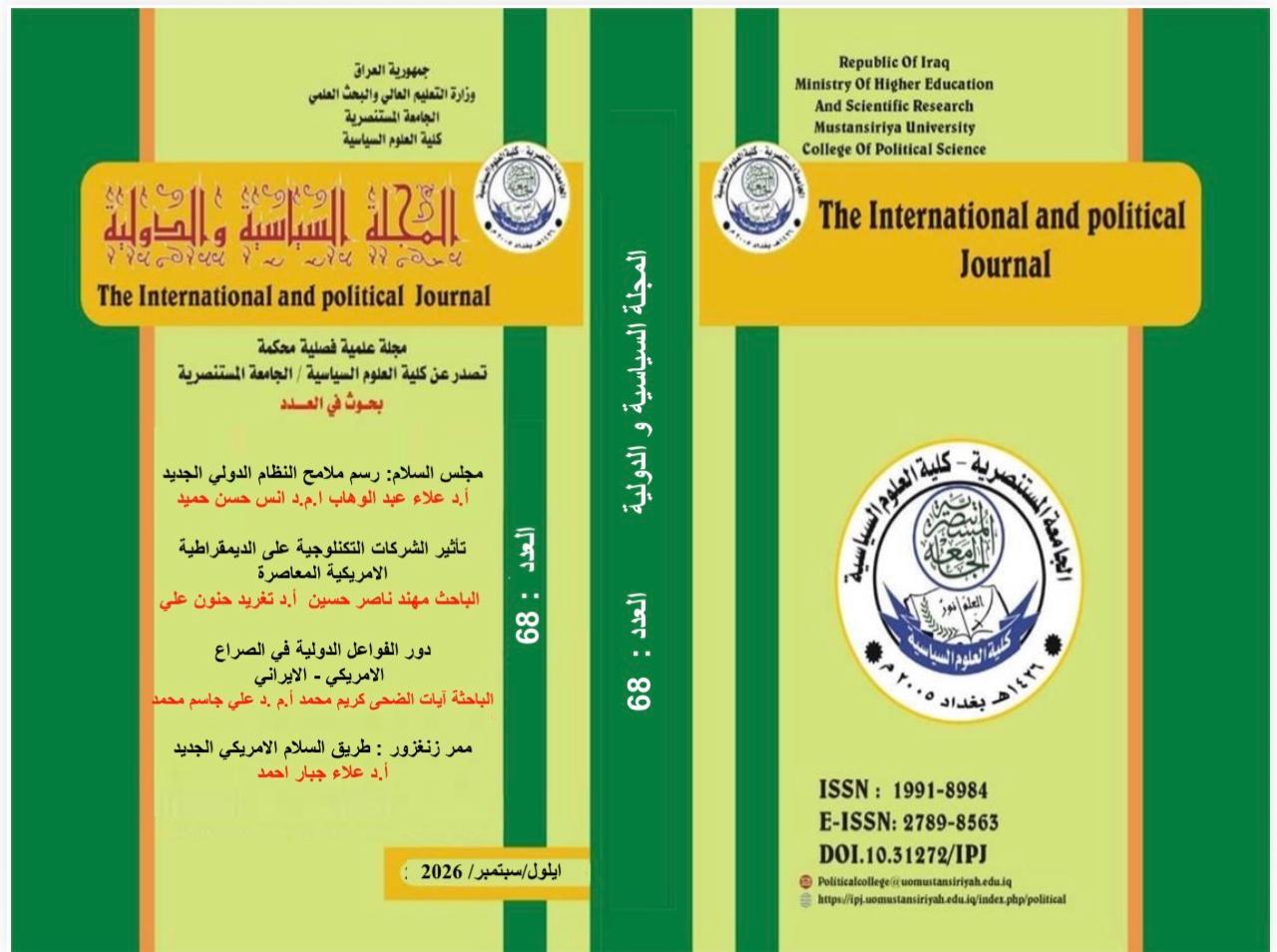
the international and political journal
Keywords:
popular demonstrations, fall of the regime, military coup،Civil War.Abstract
Since the secession of South Sudan in 2011, Sudan has entered a complex phase of political, economic, and social transformations. The secession marked the beginning of a series of successive crises, starting with the loss of a large portion of oil resources, which led to a stifling economic crisis, and then the escalation of conflicts in the states of Darfur, South Kordofan, and Blue Nile, where internal wars continued and tensions between the center and the periphery rose. In the following years, the country witnessed successive waves of popular protests, the most prominent of which was in December 2018, when the Sudanese people took to the streets demanding the overthrow of the regime due to economic hardship and the lack of freedoms. This revolution resulted in the end of President Omar al-Bashir's thirty-year rule in 2019. However, the path to stability remained fraught with obstacles, as Sudan entered a turbulent transitional phase in which civilians and the military shared power, amid regional interference and serious security and economic challenges. Despite attempts to build a democratic civil state, the situation did not stabilize. Rather, differences between the political and military components deepened, and living conditions deteriorated. For citizens, the armed conflict erupted in April 2023 between the army and the Rapid Support Forces, further complicating the situation and plunging the country into a tunnel of chaos and instability.
References
Ahmed, Hassan Al-Haj Ali. 2024. A Turbulent Transitional Period: Transformations of the Hybrid Alliance in Sudan, Omran Journal of Social Sciences and Humanities, University of Khartoum, Sudan, Issue 47.
Al-Habaiti, Khalida Ibrahim. 2022. Domestic Political Developments in Sudan in 2019 and Regional and International Positions Thereon, Lark Journal, University of Wasit, College of Arts, Iraq, Issue 47.
Al-Khidr, Kamal Muhammad Jah Allah. 2020. Sudan Confronts the Transitional Government, King Faisal Center for Research and Islamic Studies, Qatar.
Al-Tawil, Amani. 2012. The Future of Sudan: The Reality of Fragmentation and the Chances of War, Arab Center for Research and Policy Studies, Doha.
Jawad, Muhammad. 2018. The Problem of South Sudan and Its Economic and Strategic Implications, Journal of the College of Basic Education, Information and Decision Support Center, Egypt, Issue 72.
Khalaf, Hala Salem. 2024. The War in Sudan after 2023 and Its Future Prospects, International Political Journal, Al-Mustansiriya University, College of Political Science, Iraq, Issue 60.
Khalil, Salah. 2020. A Reading of the Juba Peace Agreement and its Implications for the Sudanese Interior, Al-Ahram Center for Political and Strategic Studies, Cairo, Issue 76.
Dardaq, Mustafa. 2021. Paths of Change: The Peacebuilding Process in Sudan: Reality and Hope, Arab Journal of Political and Security Studies, Libya, Issue 13.
Abdel Halim, Amira Muhammad et al. 2024. The Conflict in Sudan and the Dilemma of Settlement - The Development and Trends of the Conflict in Sudan, Egyptian File Journal, Al-Ahram Center for Political and Strategic Studies, Egypt, Issue 115.
Abdel Qader, Hatem Abdel Qader Mahmoud. 2025. The Political and Tribal Conflict in Sudan (1989-2024): An Analytical Study of the Social and Political Influences on State-Society Interaction and the Formation of National Identity, International Journal of Humanities Studies, North Kordofan University College, Sudan, Issue 1.
Karar, Ibtihal Jamal al-Din al-Sadiq. 2022. Protest Movements in Sudan and Their Role in Political and Social Transformation, Journal of Political Science, University of Wasit, College of Arts, Iraq, Issue 64.
Qashqush, Muhammad and Moataz Salama et al. 2023. Sudan: A New Hotspot in the Arc of Protracted Crises. Policy Papers, Al-Ahram Center for Political and Strategic Studies, Cairo.
Muhammad, Abu Bakr Fadl. 2020. The Peace Process in Sudan After the Revolution: Obstacles and Prospects. Africa Follow-ups Journal, King Faisal Center for Research and Islamic Studies, Qatar, Issue 6.
Muhammad, Bushra Jassim. 2021. The Military Coup in Sudan and Domestic and Foreign Positions. Arab Democratic Center, Berlin.
Muhammad, Bushra. 2021. Jassim, Developments of the Conflict in Sudan from 1989 to 2020, Iraqi Journal of Political Science, Iraqi University of Political Science, Iraq, Issue 5.
Additional Files
Published
How to Cite
Issue
Section
License

This work is licensed under a Creative Commons Attribution 4.0 International License.
Journal Policies
All articles published in the International and Political Journal are licensed under a Creative Commons Attribution 4.0 International License. This means that the Authors can:
The journal allows reuse and remixing of content in accordance with a Creative Commons license.
Copy and redistribute the material in any medium or format.
Policy of publishing in The International and Political Journal
The journal is committed to the ethics of scientific publishing, and according to the publication ethics report of the journal.
The decision to publish is based on the value of the scientific research, to what extent it meets the conditions of publication approved, the declared policy of the journal, and its specialty.
It is based on the principles of the scientific honesty, and originality of research submitted for publication. It deals with the names of reviewers and their reports with great confidentiality.
The opinions published in the journal reflect the views of the authors, and not necessarily reflect the opinion of the editorial board.
The journal does not adhere to the publication of whatever comes to it. The time and place of publication are subject to technical considerations adopted in the editorial plan of the journal.
The journal does not abide to return the research papers to their owners whether accepted for publication or not.
The researcher is to be provided with the acceptance of publication within about 24 WEEKS. As for publication, the editorial board reserves its right in priority of publishing. The arrangement of the research papers in the same issue is subject to technical standards.
Diversify of publishing papers from solid universities and scientific centers from inside and outside Iraq is preferable.
The journal maintains hard copies and electronic archive of the published issues in addition to the publication of the research papers.
The journal also publishes the issues electronically through the website of the journal, and the official website of the Iraqi academic journals, and makes it possible to download. Thus, documenting the intellectual property of the research papers and publishing them internationally is achieved.
Terms of publication may be modified when necessary with no previous notice.
The researcher obtains a copy of his research paper. If he wishes to buy acopy of the journal, the volume costs ID 10000 from inside Iraq and $8from the outside.
The Editorial Board considers that the researcher who submits his research paper for publication in the journal has already read the terms and conditions of publication and agreed on them.
The journal publishes the research papers of the postgraduate students in special issues for this purpose.
Stages of editing and publishing:
The researcher undertakes that his research has never been published before, and has not been submitted for publication to other sides until the end of the evaluation procedures and the acceptance of publication in the journal.
The research papers submitted for publication are to subjected for preliminary examination by the editorial board to determine their suitability for the journal specialization, its policy and the safety of scientific research procedures, and then to indicate its eligibility for scientific evaluation. The editorial board may apologize for accepting the research all together or require the researcher to amend it in accordance with the journal policy before sending it to editors.
After conducting the scientific evaluation, the research paper returns back to the researcher to make the required amendments within a maximum of two weeks.
A copy of the final research paper is to be submitted to the secretariat of the journal a hard copy and a soft copy on a CD, in both Word and PDF format. The researcher is fully responsible for the typing and linguistic mistakes after submitting the full research paper on a CD.
Plagiarism checker
All research papers are subjected to Turnitin program to uncover plagiarism before being sent to scientific evaluation. The researcher undertakes a written pledge to take the legal and moral responsibility, in the event of the emergence of plagiarism or taking from the efforts of other researchers, without a reference to them. The journal uses appropriate anti-plagiarism software, such as Turnitin to check for plagiarism.
Dealing with Allegations of Research Misconduct
The Journal shall take reasonable and serious steps to identify and prevent the publication of papers where research misconduct has occurred, including plagiarism, citation manipulation, and data falsification/fabrication.
Scientific Evaluation:
Scientific evaluation strengthens the research paper submitted to the journal and helps to take the appropriate decision by the editorial board to publish it. It also benefits the researchers to improve and correct their research papers.
The research paper is sent to three evaluators in the same specialty to evaluate